How Pilates Improves Posture, Core Strength, and Everyday Movement | OAK PILATES of Smithtown & Commack, NY

How Pilates Improves Posture, Core Strength, and Everyday Movement
Good posture is about much more than simply remembering to “stand up straight.” Healthy posture depends on strength, mobility, balance, breathing, and body awareness working together. When these elements are out of balance, the body may compensate by rounding the shoulders, pushing the head forward, arching the lower back, or shifting more weight to one side.
Modern routines can make these problems worse. Long hours at a desk, frequent smartphone use, repetitive movements, inactivity, and improper exercise technique can all influence how the body holds itself. Over time, inefficient movement patterns may contribute to stiffness, muscular fatigue, reduced mobility, and discomfort in the neck, shoulders, hips, or back.
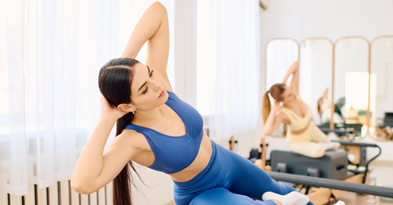
Pilates offers a thoughtful, full-body approach to improving posture. Through controlled movements, focused breathing, resistance training, and precise alignment, Pilates helps participants build the strength and awareness needed to move more efficiently.
At OAK PILATES, clients receive professional Reformer Pilates instruction designed to improve core strength, mobility, balance, flexibility, posture, and overall body awareness. With progressive class levels and equipment including the Pilates Reformer and vertical Fuse Ladder, OAK PILATES helps people throughout East Northport, Smithtown, Commack, and surrounding Suffolk County communities become stronger and more confident in their movement.
Why Good Posture Matters
Posture describes how the body’s joints and muscles work together while standing, sitting, exercising, and moving. Good posture does not mean holding the body in one rigid “perfect” position. Instead, it means maintaining efficient alignment while having the strength and mobility to change positions comfortably.
When the body is well aligned, muscles can share the workload more effectively. This may reduce unnecessary strain on the spine, joints, and surrounding soft tissues. Healthy posture can also support more efficient breathing, better balance, and improved performance during daily activities.
Posture is especially important because back pain and chronic discomfort affect a significant portion of the population. The World Health Organization reports that approximately 619 million people experienced low-back pain in 2020. That figure is projected to reach 843 million by 2050, and low-back pain remains the leading cause of disability worldwide. Approximately 90% of low back pain cases are classified as nonspecific, meaning no single identifiable structural cause can be determined. World Health Organization
Pain is also a widespread concern in the United States. According to the National Center for Health Statistics, 24.3% of American adults experienced chronic pain in 2023, while 8.5% experienced high-impact chronic pain that frequently limited work or daily activities. The percentage reporting chronic pain increased from 12.3% among adults ages 18–29 to 36% among adults age 65 and older. CDC National Center for Health Statistics
Pilates is not a cure for every source of pain, and posture is only one part of musculoskeletal health. However, a well-designed Pilates program can address several physical qualities associated with healthier alignment and more comfortable movement.

Pilates Strengthens the Muscles That Support the Spine
One of the most recognized benefits of Pilates is core training. The core includes more than the visible abdominal muscles. It is a coordinated system involving the deep abdominals, spinal stabilizers, diaphragm, pelvic floor, hips, and surrounding muscles.
These muscles help stabilize the torso as the arms and legs move. When core endurance or coordination is limited, the body may rely excessively on the neck, shoulders, or lower back. Pilates teaches participants to maintain control through the trunk while performing movements with the extremities.
Reformer exercises offer adjustable spring resistance, allowing clients to strengthen their bodies while receiving support and feedback from the equipment. Instead of relying on momentum, participants are encouraged to move deliberately and maintain alignment throughout each repetition.
With consistent practice, improved core control can make it easier to sit, stand, lift, walk, and exercise without unnecessary tension. The goal is not to constantly brace the abdominals. It is to develop a responsive core that activates appropriately when the body needs stability.
Pilates Develops Greater Body Awareness
Poor postural habits often become automatic. A person may not realize that their shoulders are elevated, their head is drifting forward, or their weight is consistently shifted onto one leg.
Pilates emphasizes concentration and precision. Instructors provide verbal and visual cues to help participants identify the positions of the rib cage, pelvis, shoulders, head, and spine. This process develops proprioception—the body’s ability to understand where it is in space.
Greater body awareness can carry beyond the studio. Participants may begin to recognize when they are slouching at a desk, holding tension while driving, or using inefficient mechanics when lifting something. Once a habit is recognized, it becomes easier to adjust it.
OAK PILATES’ Level 1 Form & Alignment Foundations class introduces breath, alignment, and control in a supportive environment. As participants progress, more complex movements, resistance, balance challenges, and coordinated sequences help reinforce these foundational skills.
Pilates Improves Mobility and Flexibility
Posture is affected by both strength and mobility. Strengthening alone may not address a stiff upper back, restricted shoulders, tight hips, or limited spinal movement. Pilates combines strengthening with controlled mobility exercises, helping participants move through a comfortable range of motion while maintaining stability.
For example, exercises that encourage upper-back extension may help counteract the rounded position commonly associated with prolonged sitting. Hip mobility exercises can reduce the need for the lower back to compensate during walking, bending, or reaching. Shoulder and chest-opening movements may help participants organize the upper body without forcing the shoulders backward.
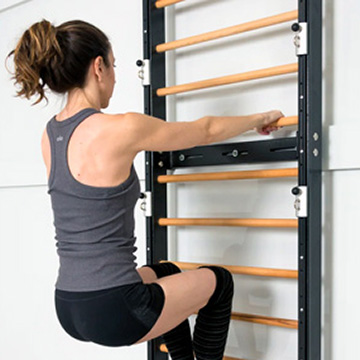
The vertical Fuse Ladder available at OAK PILATES expands the possibilities for supported stretching, standing work, rotational movement, and full-body strength training. It encourages the body to work in multiple planes rather than limiting exercise to forward-and-back motion.
The horizontal Reformer and vertical Fuse Ladder complement each other by providing different forms of assistance, resistance, and movement feedback. Together, they can help clients build mobility they can actively control.
Pilates Encourages Balanced Muscular Development
Many postural patterns involve muscle imbalances. Certain muscles may become overworked while others contribute less effectively. Someone with rounded shoulders, for example, may experience tension through the chest and neck while lacking endurance in the muscles that stabilize the shoulder blades.
Pilates uses coordinated, full-body movements that address the front, back, and sides of the body. Exercises may strengthen the upper back, glutes, hips, abdominals, and shoulder stabilizers while also improving flexibility in commonly restricted areas.
Unilateral exercises—movements performed with one arm or leg—can help reveal differences between the right and left sides. Under an instructor’s guidance, participants can work toward more balanced movement without assuming that every asymmetry is abnormal or needs to be “fixed.”
This balanced approach supports posture because the body becomes better prepared to distribute physical demands. Instead of one area doing all the work, multiple muscle groups learn to cooperate.

Pilates Integrates Breathing With Alignment
Breathing plays an important role in posture and movement. When someone is stressed, stiff, or slouched, breathing may become shallow and concentrated in the upper chest. Pilates teaches coordinated breathing that encourages expansion through the rib cage while maintaining appropriate abdominal support.
The diaphragm is part of the core system, so breathing and stability are closely connected. Coordinating the breath with movement can help participants manage abdominal pressure, reduce unnecessary tension, and move with greater control.
Breathing cues may also encourage participants to slow down and focus on movement quality. This is one reason Pilates can feel both physically challenging and mentally centering.
SIGN UP FOR PILATES CLASSES HERE!
What Does Research Say About Pilates and Posture?
Scientific research supports Pilates' potential to improve posture, although results vary by population, program, and condition studied.
A 2024 systematic review examined nine qualifying studies involving 643 participants. The studies evaluated outcomes including postural alignment, spinal range of motion, trunk rotation, Cobb angle, physical function, pain, and quality of life. The review concluded that Pilates showed positive effects on posture and certain spinal conditions, particularly through improved muscular strength and control.
The researchers also emphasized that the evidence should be interpreted carefully because only nine studies qualified, the study quality varied, and longer-term research is still needed. In other words, the findings are encouraging, but Pilates should not be presented as a guaranteed treatment for structural spinal conditions. BMC Sports Science, Medicine and Rehabilitation
For most participants, the practical value of Pilates is its ability to train several posture-related qualities simultaneously: core stability, muscular endurance, mobility, breathing, balance, coordination, and awareness.

How Often Should You Practice Pilates?
Consistency is more important than trying to transform posture in a few sessions. Postural habits are developed through thousands of repeated movements and positions, so meaningful change generally takes time.
Many people benefit from practicing Pilates two or three times per week, depending on their goals, experience, schedule, and overall health. Changes may first appear as improved awareness or better exercise control. With continued participation, clients may notice greater strength, easier movement, improved balance, and more confidence maintaining alignment during everyday activities.
Progress should be gradual. Beginners benefit from learning foundational movement patterns before increasing resistance or attempting advanced exercises. OAK PILATES offers progressive levels so participants can develop control and confidence before moving into more demanding sequences.
Build Better Posture at OAK PILATES
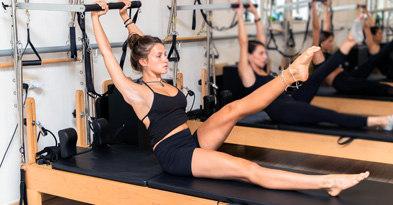
OAK PILATES provides professional, low-impact, full-body workouts for participants with different experience levels and fitness goals. Classes incorporate the Pilates Reformer, vertical Fuse Ladder, traditional mat movements, breathing techniques, and attentive instruction.
Whether your goal is to improve posture, develop core strength, increase mobility, support athletic performance, or simply move with greater confidence, Pilates can help you build a stronger foundation.
Better posture is not created by forcing the shoulders backward or holding the body rigidly. It develops when strength, mobility, awareness, breathing, and control begin working together. Pilates trains each of these qualities, helping you become more “grounded to the core” both inside and outside the studio.
Visit OakPilatesNY.com to explore class levels, view the schedule, or book a Pilates class. To contact the East Northport studio, call 631-623-6233.


Comments
Post a Comment